What is polyethylene pipe?

لوله‌های فلزی هنوز در برخی از خانه‌های قدیمی دیده می‌شود. از این لوله‌ها برای انتقال آب، گاز و حتی فاضلاب استفاده می‌شد. سالی نبود که لوله‌ها در اثر سرما یا خوردگی به دلیل نشت لوله آسیب نبینند. اغلب پیش می‌آمد که لوله‌های خورد می‌شدند و از بین می‌رفتند. به همین دلیل لوله کشی یکی از پردرآمدترین مشاغل در آن زمان بود. اما ناگهان ورق برگشت. لوله‌های فلزی با لوله‌های پلاستیکی جایگزین شدند. لوله انعطاف پذیر که با سی سال گارانتی همراه بود. به این‌ها لوله‌های پلی اتیلن می‌گویند. برای کسب اطلاعات بیشتر درباره این محصول تا انتهای این مقاله از سایت گروه تولیدی صنعتی پایپ اتیلن همراه باشید.

لوله پلی اتیلن

لوله‌هایی که از مواد شیمیایی پلی اتیلن ساخته شده بودند، این لوله‌ها خیلی سریع فراگیر شدند. سبکی، حمل و نقل آسان، ضایعات کم و از همه مهمتر مقاومت بالای این لوله ها باعث محبوبیت بسیار زیاد آن‌ها شده است.

اما ویژگی بارز لوله‌های پلی اتیلن مقاومت در برابر نفوذپذیری این ‌ها در برابر مواد شیمیایی آلی و معدنی است. بر اساس تحقیقات دانشمندان دانشگاه کالیفرنیا، برکلی، لوله پلی اتیلن 15 برابر بیشتر از ‌های فلزی در برابر مواد شیمیایی نفوذپذیر است.

لوله پلی اتیلن اولین بار در دهه 1950 ساخته شد. در آن زمان تمایل به کرک وجود داشت. اما مزایای سهولت حمل و نقل و انعطاف پذیری لوله ها مشتریان را مجبور به ریسک و خرید این لوله ها کرد.

با توجه به جدید بودن محصول و فروش خوب، کارشناسان توجه بیشتری به محصول داشته و سعی در رفع مشکلات آن داشتند. حتی لوله های فلزی این روزها حداقل برای آبرسانی دیده نمی شود. در این مقاله سعی داریم شما را با لوله های پلی اتیلن و انواع آن آشنا کنیم.

لوله پلی اتیلن که به اختصار PE نامیده می شود، نوعی لوله است که از پلیمریزاسیون اتیلن به روش اکستروژن تولید می شود و به صورت تک جداره، دو جداره، آبیاری، لوله PEX و لوله PE-RT عرضه می شود.

لوله پلی اتیلن چیست؟

لوله پلی اتیلن که به اختصار PE نامیده می شود، نوعی لوله است که از پلیمریزاسیون اتیلن تولید می شود. قبل از تولید محصول نهایی لوله پلی اتیلن، زمانی که مونومر اتیلن در معرض پلیمریزاسیون قرار می گیرد، پلی اتیلن تولید می شود.

پلی اتیلن در گروه ترموپلاستیک طبقه بندی می شود که خاصیت ترموپلاستیک دارد. یعنی می توان آن را گرم کرد و ذوب کرد و تغییر داد. از ویژگی های پلی اتیلن می توان به مقاومت، انعطاف پذیری و عمر بسیار طولانی اشاره کرد. پلی اتیلن به چند دسته تقسیم می شود و ملاک این تقسیم بندی، چگالی یا چگالی پلی اتیلن در زمان تولید است.

پلی اتیلن با چگالی کم: LDPE شاخه های جانبی این نوع پلی اتیلن بلندتر و بیشتر از حد معمول هستند. در این نوع پلی اتیلن زنجیره های مولکولی از هم فاصله زیادی دارند. این فاصله طولانی تراکم را کاهش می دهد.

پلی اتیلن کم چگالی خطی: LLDPE در فرآیند تولید پلی اتیلن، زمانی که کومونومر معمولی بوتن به اتیلن اضافه می شود، محصول دارای شاخه های جانبی بیشتری اما طول برابر خواهد بود. اگرچه این شاخه ها بلند هستند، اما از نظر طول زنجیره پلیمری کوتاه هستند. به دلیل خطی بودن زنجیره های پلیمری، این نوع پلی اتیلن را پلی اتیلن خطی می نامند.

پلی اتیلن با چگالی متوسط: MDPE، این نوع پلی اتیلن از نظر مقاومت و مقاومت در برابر ضربه بالا کارایی بهتری نسبت به HDPE دارد. از این پلی اتیلن برای بسته بندی (درب بطری) استفاده می شود.

پلی اتیلن با چگالی بالا: میزان بلورینگی HDPE بیشتر از پلی اتیلن های دیگر است. بنابراین ساختار فشرده تر و چگالی بالاتری دارد و به همین دلیل به آن پلی اتیلن سنگین می گویند این نوع پلی اتیلن دارای شاخه های جانبی کمتری نسبت به پلی اتیلن های دیگر است.

فرآیند تولید لوله پلی اتیلن

مانند لوله فولادی ضد زنگ، لوله پلی اتیلن نیز به روش اکستروژن تولید می شود. در مرحله اول مواد اولیه به صورت گرانول وارد اکسترودر می‌شود. گرما باعث ذوب شدن دانه‌ها می‌شود. مواد مذاب از اکسترودر خارج شده و با کمک پیچ وارد قالب می شوند.

پس از قالب گیری مواد مذاب وارد قسمت تنظیم کننده قطر (مخزن خلاء) می شود. اعمال فشار مناسب در این قسمت به لوله شکل صحیح آن را می دهد. هنگامی که اندازه واقعی لوله پیدا شد، از رگولاتور خارج می شود.

به محض برداشتن لوله، با جریان آب سرد خنک می شود. لوله تولید شده توسط یک کشنده از مخزن خنک کننده خارج می شود. از این روش در تولید لوله پلی اتیلن تک جداره استفاده می شود. خنک کاری لوله ها در قطرهای باریک به روش سیلابی انجام می شود. برای آشنایی با لوله های فولادی ضد زنگ که ذکر شد؛ می توانید مقاله لوله استنلس استیل چیست و انواع آن را مشاهده کنید.
Quality control tests on raw materials and polyethylene pipes

The raw materials for polyethylene pipe production, whether polyethylene or masterbatch, are tested before use and after approval, are used in pipe production:

1- Raw material tests

1-1- MFR test

Polyethylene granules in accordance with ISO 9680-1 must be tested at a temperature of 190 degrees Celsius and a weight of 5 kg. After filling the device with about 3 grams of material, the material is preheated for 4 minutes and then the test is started. The device automatically cuts every two minutes. Since the MFR test result is reported as (gr/10min), the weight of 5 cuts from the device output will indicate the MFR value.

The permissible value in the INSO 14427 standard is reported to be between 0.15 and 0.7 g/10 minutes, and no distinction is made between the values ​​of PE100 and PE80 materials, but this value is desirable when it is between 0.15 and 0.23 for PE100 materials.

1-2- OIT test

Polyethylene granules in accordance with the national standard 6-7186 must be tested at a temperature of 200 degrees Celsius for 20 minutes under the blowing of oxygen gas. During this period, polyethylene should not undergo thermal degradation and oxidation. Although the thermal stability value is reported to be 20 minutes, this test is performed for more than one hour in the Pasargad Pipe Laboratory to obtain more information about the quality of the raw materials.

1-3- Density test

The density of polyethylene granules is also examined in accordance with the national standard 1-7090. The permissible value according to the INSO 14427 standard is greater than 0.941 g/cm3.

1-4- Soot percentage test

If the raw materials are self-colored, a soot percentage test is performed on the raw materials in accordance with the ISO6964 standard. In this test, 1 gram of the material is burned inside the furnace at a temperature of 10 minutes at 350 degrees Celsius, 10 minutes at 450 degrees and 30 minutes at 550 degrees Celsius under high purity nitrogen gas to determine the percentage of black carbon (soot). The permissible value according to the INSO 14427 standard is between 2 and 2.5 percent.

1-5- Soot dispersion test

Similar to section 1-1-4, if self-colored materials enter the factory, the soot dispersion rate of the raw materials is measured in accordance with the ISO 18553 standard. In this test, the degree of dispersion is determined by preparing thin films of the material and examining it with a microscope. The permissible value according to the INSO14427 standard is reported to be less than or equal to 3.

1-6- ESCR test

This test must be performed by the raw material manufacturer and stated in the raw material datasheet.

2- Tests related to polyethylene pipes

2-1- MFR test

Polyethylene pipes according to the ISO 9680-1 standard must be tested at a temperature of 190 degrees Celsius and a weight of 5 kg. After filling the device with about 3 grams of material (the pipe is cut into cubes), the material is preheated for 4 minutes and then the test is started. The device automatically cuts every two minutes. Since the MFR test result is reported as (gr/10min), the weight of 5 cuts from the device output will indicate the MFR value.

It is noteworthy that the MFR value of the pipe should not differ from the MFR of the raw materials by more than 20%.

In accordance with the INSO14427 standard, in multilayer pipes, the MFR test must be performed on each layer separately and the results recorded for each layer.

2-2- OIT test

Polyethylene pipes in accordance with the national standard 7186-6 must be tested at a temperature of 200 degrees Celsius for 20 minutes under oxygen gas blowing. During this period, the pipe should not undergo thermal degradation and oxidation.

In accordance with the INSO14427 standard, in multilayer pipes, the OIT test must be performed on each layer separately and the results recorded for each layer.

2-3- Density test

The density of polyethylene granules is also examined in accordance with the national standard 7090-1. The permissible amount according to the INSO 14427 standard is greater than 0.941 g/cm3.

2-4- Soot percentage test

The permissible amount of soot in polyethylene pipes according to the INSO 1442 standard is between 2 and 2.5%. The test is carried out according to the method of paragraph 1-4. Currently, due to the lack of use of self-coloring materials and the use of masterbatches to provide soot in the pipe, this amount is highly dependent on the complete mixing of the materials by the fine materials.

2-5- Soot dispersion

According to the ISO 18553 standard, the amount of soot dispersion of the raw materials is measured. In this test, the degree of dispersion is determined by preparing thin films from 6 different points of the pipe and examining it with a microscope. The permissible amount according to the INSO14427 standard is reported to be less than or equal to 3.

2-6- Tensile test

To perform the tensile test, samples are first cut by CNC machine depending on the thickness.

Pipes with a thickness of up to 5 mm are called Type 2, samples with a thickness of more than 5 mm are called Type 1, and samples with a thickness of more than 12 mm are called Type 3.

After placing the samples in the two jaws of the tensile machine, the samples are stretched at a certain speed. According to the INSO 14427 standard, the elongation before rupture of the sample must be more than 350%.

2-7- Hydrostatic pressure test

Polyethylene pipes according to the national standard 1-12181 must withstand a certain pressure for a certain period of time and temperature.

This test is performed for either 100 hours at 20 degrees Celsius or 165 hours at 80 degrees Celsius or 1000 hours at 20 degrees Celsius and for each given pipe, the applied pressure is calculated according to the following formula.

emin  Minimum thickness

dem  Pipe diameter

σ  Stress value

Pipe type Test stress in MPa

100 hours at 20 degrees Celsius 165 hours at 80 degrees Celsius 1000 hours at 80 degrees Celsius

PE 100 12.4 5.5 5

PE 80 9 4.6 4

PE 63 8

Extrusion and coextrusion process

Extrusion process Extrusion is one of the most common processes for producing polymer products.

This process is used to produce products that are produced uniformly and continuously (such as pipes and profiles). In general, the goal of this process is to produce a product of appropriate quality and in accordance with the taste and demand of the customer.

To achieve these goals, 5 points must be considered in the quality of the product, which are:

Appropriate polymer melting temperature
Uniform melt temperature
Constant correct melt pressure in the die
Uniform melt pressure
Constant product in the die with a homogeneous melt to optimize a process

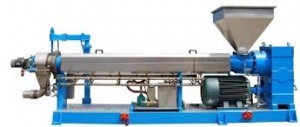
A superficial understanding of the extrusion process, such as how it works, is not enough. Therefore, it is necessary to examine and analyze the behavior of polymer materials in different areas of the extruder. Also, to effectively eliminate defects in the production line, extrusion equipment and how they behave with polymer materials and ultimately the properties created in the product must be understood. Here, a process with an extruder is examined. The following figure (Figure 1) shows the key points of a single screw extruder. These points consist of 5 main parts:

Drive system
Feeding system
Screw system, barrel and heaters
Head and die area
Control system

Drive system: This system includes the motor, gear box, thrust bearing, bull gear and the screw feed section.

Feeding system: Includes the hopper, feed throat and screw feed section.

The screw, barrel and heaters system is where the solid resin is moved forward, melted and pumped towards the die. The extruded material is transferred and takes on the desired shape by the die and adapter.

Control system: It controls the electrical inputs to the extruder and records its electrical feedback. This control system controls all the extrusion processes in addition to controlling all the control inputs. Co-Extrusion Co-extrusion is the simultaneous extrusion of multiple layers of material.

This type of extrusion uses two or more extruders to melt the materials and deliver a fixed volume of different melts of different viscosities to a die, which extrudes the resin into the desired shape and product. This process can be used in a variety of extrusion processes (blown film, profile or sheet). The thickness of the layers is controlled by adjusting the speed and relative sizes of the amounts of each material in each extruder. There are many reasons why manufacturers use co-extrusion instead of a single-layer process.

For example, in the vinyl fence industry, co-extrusion is used to adjust the layers. Usually, a layer of expensive materials that are resistant to corrosion is extruded on the outer surface of the fence, while the materials inside have additives that are more effective against impact and structural performance of the part.

Extrusion process, the heart of polymer processes

Extrusion process?

It is a process during which plastic materials in the form of granules, powder, flakes, etc. are continuously shaped and the final product is produced in the form of tubes, solid rods, sheets, wire coatings, various types of films, etc.

The word continuous is considered a very important and inseparable feature of this process.

All of the above products can be molded and produced in short lengths by other methods.

The extrusion process finds its special application when the manufacture of long-length parts is considered. Such as hoses, water pipes, etc., which are cut into the dimensions desired by the consumer after production.

What is the function of the extruder?

The extrusion process is used to mix and blend two or more components of the formulation. This method can also be used to mix milled and fresh waste materials. The polymer obtained is converted into granules of the required dimensions by a granulator and then shaped by the usual methods of injection, extrusion, blowing, etc. The capacity of extruders is expressed in terms of the amount of material they extrude per hour. For example, one hundred kilograms per hour, the efficiency can be used to determine whether the device is large or small.

What is the most important part of an extruder?

The most important part of an extruder is its screw. Most of the active extruders in the world have one screw, some have two screws, and sometimes four. One of the important features of multi-screw extruders is their good ability to mix and blend materials. In addition, the extrusion efficiency of a twin-screw machine is three times that of a single-screw machine. The high price of these devices is a factor that has not been replaced as it should be due to their rapid expansion in production centers.

What parts does an extruder consist of?

Single screw extruders have 7 important parts:

Feed hopper: which is the location of the feed or polymer mixture (hopper).
Barrel: The screw is located in the center and in its length direction, and the heating and cooling elements are installed near the inner surface to provide the heat needed to melt the materials.
Screw: It is responsible for moving and heating the granules. Moving and compacting them while in contact with the hot surface of the barrel, it melts the materials and then passes the polymer melt through the die.59- Extrusion process, the heart of polymer processes
Motor and gearbox: To rotate the screw at the optimal speed in order to achieve maximum production.
Circular mesh screen: It is used to filter the molten fluid and create back pressure.
Die: Determines the final shape of the product. In fact, it plays the role of a mold in the extrusion process.
Thermocouples:

Characteristics of types of double-walled polyethylene corrugated pipes

Corrugated polyethylene pipes have long been used as one of the best and most efficient industrial pipes for installation in piping networks around the world.

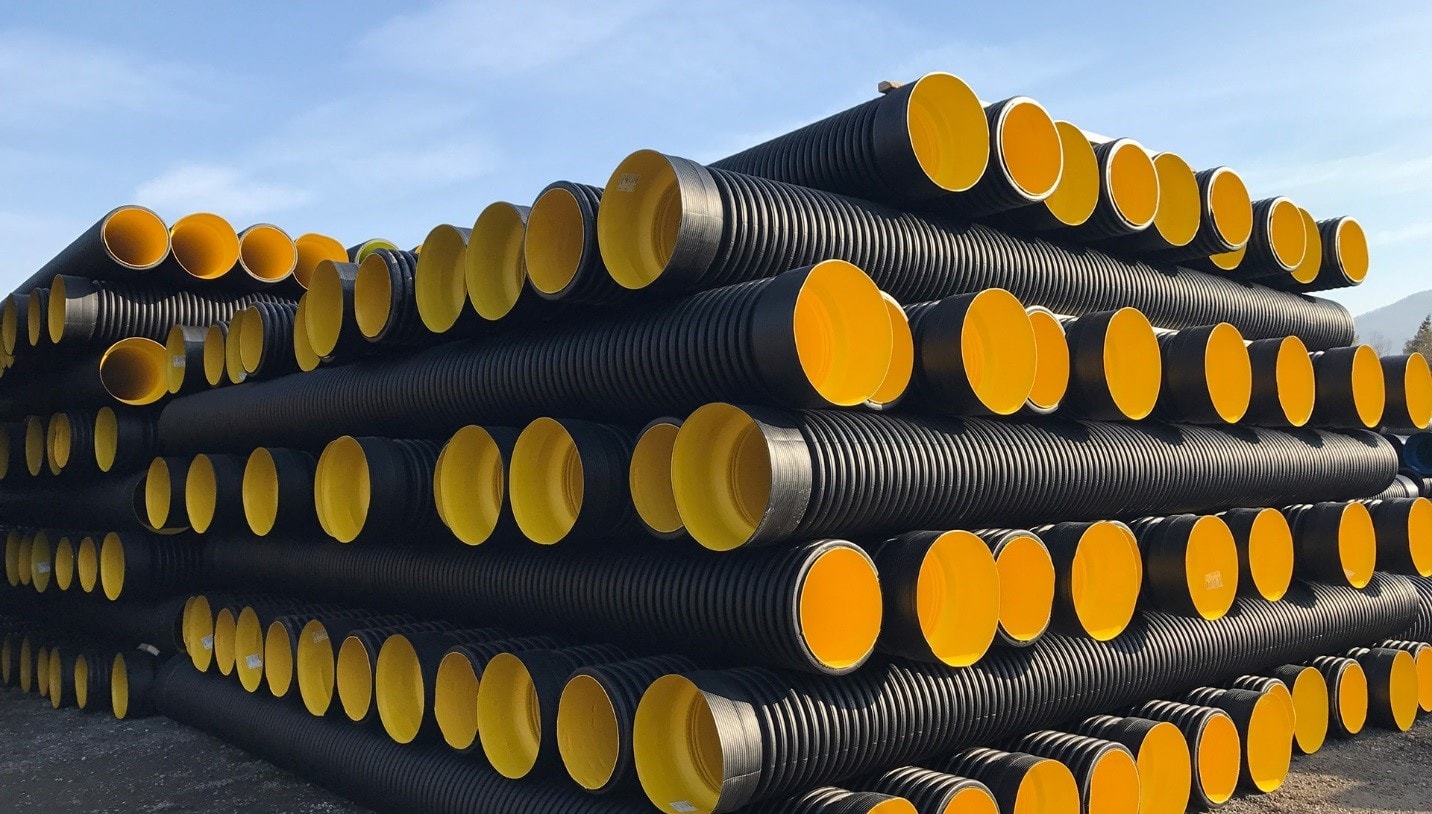
The outer structure of these pipes is in the form of a ring-shaped tooth and their inner wall is smooth and polished. This category of polyethylene pipes is produced under EN 13476-1 and DIN 16961 – 16566 standards. HDPE polyethylene material with commercial grade PE80 is used to manufacture these pipes.
Corrugated polyethylene pipes are a suitable solution for launching and establishing new projects for transporting sewage, wastewater, drinking water and chemicals; These pipes are designed and manufactured using world-class technologies; Strength, durability, high strength and economic efficiency are the most important factors that have made corrugated polyethylene pipes popular worldwide.
The ribbed and ring-shaped wall of corrugated polyethylene pipes increases its strength against high pressure. One of the most important practical features of these corrugated pipes is their high resistance to chemicals and different temperature conditions. For this reason, these pipes are suitable for transporting industrial wastewater that contains a high percentage of harmful chemical compounds.

In expressing the diverse applications of polyethylene corrugated pipes, it can be said that these pipes cover various areas of industries; these pipes are used in plumbing for irrigation and agricultural water supply systems, rainwater transfer, sewage lines and urban plumbing (residential and commercial buildings), industrial plumbing, agricultural drainage and water transfer by gravity. It should be noted that the use of corrugated pipes for each of the above cases requires the appropriate selection of the pipe in terms of diameter and dimensions.

Features and characteristics of types of polyethylene corrugated pipes

Since they are made of polyethylene materials, polyethylene corrugated pipes are highly resistant to corrosion and temperature changes (complete freezing – extreme heat). These pipes are able to remain in the piping network for at least 50 years without any serious changes. Corrugated pipes are lightweight and easy to transport. The most important practical features of polyethylene corrugated pipes include the following:

Polyethylene corrugated pipes are highly resistant to abrasion, wear and tear, and decay caused by chemicals.
Due to the unique design of the outer wall of these pipes, increased resistance of the wall to environmental pressures is provided for them when installed in a buried state.
If the polyethylene corrugated pipe is installed buried, the pipe wall shows high resistance to ground movements, changes in soil conditions and environmental stress and maintains its properties.
There is no need for specialized equipment or additional labor to transport the types; these pipes are light and can be easily installed.
The method of connecting double-walled polyethylene pipes in the piping network is very simple; the use of various fittings is recommended for this task.

The durability and longevity of the polyethylene corrugated pipe is the most important reason why engineers always tend to use this pipe for their projects.
Buying double-walled polyethylene pipes is always economically viable because their price is lower compared to other pipes.

The necessity of using polyethylene corrugated pipes in pipelines

Fluid can pass through polyethylene corrugated pipes without friction. The walls of these pipes never become clogged, and this is a big advantage, because the blockage of the pipes damages the walls of the pipes. The walls of the corrugated pipes have high impact resistance. One of the features that makes the use of these pipes easy for engineers is the ability to install different connections in different directions on the pipes. It is easy to use various types of polyethylene connections in pipelines using polyethylene corrugated pipes. Corrugated pipes, like polyethylene pipes, are produced and supplied in different sizes, which can be easily used in all industries without any restrictions.
Since polyethylene corrugated pipes have excellent functional properties, they are known as one of the most widely used pipes in industries, and repairs and maintenance of lines are possible in the shortest possible time. In general, the operating costs of installing this type of pipe and fittings are much lower. For more information about the price of corrugated pipes, how to order and purchase them, you can contact Kalavaran Sanat Company.

Types of plastics and polymer compounds

Introduction
They were developed in the mid-19th century.
Until the mid-1950s, the main source of raw material for the plastics industry in Europe was coal.
Today, the plastics industry is closely related to the oil industry. The reason is the development of petrochemical and oil industries and changes in human consumption patterns.
Widely used, from common items (bottles, bags, etc.) to technology (electronics, aerospace, etc.)
Production of more than 150 million tons annually in the world
One of the best human artifacts and the main environmental pollutants
Plastic is considered a non-degradable material with a lifespan of about 500-300 years. Plastic waste left over from food products, which is used as food and hygiene packaging, is a major problem. The most obvious of these are visual and environmental pollution and irreparable damage to water, soil, air and living organisms.
The raw materials for making plastics are polymers.

Polymer + additives = plastics + processing = plastic objects + utilization = plastic waste

Polymer

Polimer (Greek) = بسپار (Persian)
Polymers: from the connection of one or more monomers with long chains of carbon and hydrogen
Polymers are linear, branched, cross-linked according to their reaction.
Types of polymers
Homopolymer
Copolymer
Natural polymers: polynucleotides, polysaccharides, polypeptides
Synthetic polymers: synthetic rubbers, bakelites, nylons, polyesters
Synthesis of polymers: laboratory, biological and modified natural polymers
Laboratory synthesis
Additional polymerization: polyethylene, chipboard, polyvinyl chloride
Condensation polymerization: nylon (polyamide), Dacron, Kevlar
Properties of polymers
Polymer strength
Increase in the boiling, melting and viscosity points of the polymer with increasing chain length
Increase in elastic strength
High strength of polymers due to their crystalline structure
High dyeability
Types of polymers
Thermoplastic (soft heat)
Can be liquefied by heat – they are malleable and can be used after cooling. Such as: polyethylene, polypropylene, polyvinyl chloride, polystyrene

Thermostats (heat-hardening)

They do not melt and burn and are destroyed after a while when heated. Such as: phenol formaldehyde, urea formaldehyde, epoxy resins, unsaturated polyesters, polyurethanes, polyacetals, polyamides, polycarbonates

Polyvinyl chloride (PVC)

PVCis a member of the family of polymers and copolymers, has a common vinyl group -CH2-CH

60% of PVC is chlorine, which is obtained from table salt
It has little transparency, but due to the bulky polymer chains (the result of the large substitution of chlorine), it has strength and hardness.

VC

Under open air conditions, a colorless, flammable gas with a slightly sweet odor
High vapor pressure and relatively low solubility in water
Liquid under pressure
Very stable and non-corrosive at limited temperatures and in the absence of air, but decomposes somewhat at temperatures above 450 ° C and in the presence of sodium or potassium hydroxide
In the United States, about 97% of VC is used to synthesize PVC, and the rest is used to produce copolymers, methyl chloroform and other uses
Formation of vinyl chloride polymers from vinyl chloride monomers

Polystyrene (PS)

Polystyrene is biologically neutral and transparent, has good resistance to water absorption, and is a very good thermal and electrical insulator. The main problem is contact with styrene

monomers, and products such as formaldehyde, benzaldehyde, ammonia, carbon monoxide, etc. are also produced in thermal decomposition

Styrene

Styrene is commercially obtained by dehydrogenation of ethylbenzene Comes
Styrene is widely used in the production of polystyrene, plastics, polyesters, protective coatings and resins.
Styrene is a colorless to slightly yellowish, oily liquid with a pungent aromatic odor
It is slightly soluble in water and soluble in alcohol, ether, acetone, benzene, carbon disulfide
Styrene is heavier than air and forms an explosive mixture in the range of 1.1 to 6.1% of air.

Polyethylene (PE)

Polyethylene is a polymer made from ethylene. Ethylene is the lightest olefin, a colorless, flammable gas with a slightly sweet odor

Polyethylene resins have high flexibility, good resistance to acids, bases, and salts (except strong oxidizing agents) and water

Three main groups of polyethylene: high-density polyethylene (HDPE), low-density polyethylene (LDPE), and linear low-density polyethylene

High-density polyethylene: reduced flexibility, resistance to chemicals and environmental stresses

Light-density polyethylene: low density and good flexibility

Linear low-density polyethylene: better strength and elasticity, resistant to tearing and puncture

Polypropylene (PP)

Polypropylene is a thermoplastic polymer, opaque, rigid, and resistant to heat, chemical solvents, bases, and acids

One of the most important properties of polypropylene is its lack of moisture absorption, which makes it a It has become a suitable choice for many applications.
Ease of molding for injection molding and acceptable fluidity in the mold
Ability to mix with fillers such as sawdust and create composites
Ability to heat weld
Ability to recycle

Phthalates

Phthalates are widely used as plasticizers in PVC production
The use of phthalates as an additive has been a concern in recent years due to the increase in cancer and liver damage.
Among the more than 30 different phthalates available on the market: DEHP is the most widely used plasticizer
DEHP is clear and oily
Widely used in the production of plastic and PVC products manufactured in medical products, blood bags, surgical tubes, food coatings and children’s toys
DEHP can be medically challenging because significant amounts of it have been found in blood products, which can pose health risks due to