
Types of plastics and polymer compounds
Introduction
They were developed in the mid-19th century.
Until the mid-1950s, the main source of raw material for the plastics industry in Europe was coal.
Today, the plastics industry is closely related to the oil industry. The reason is the development of petrochemical and oil industries and changes in human consumption patterns.
Widely used, from common items (bottles, bags, etc.) to technology (electronics, aerospace, etc.)
Production of more than 150 million tons annually in the world
One of the best human artifacts and the main environmental pollutants
Plastic is considered a non-degradable material with a lifespan of about 500-300 years. Plastic waste left over from food products, which is used as food and hygiene packaging, is a major problem. The most obvious of these are visual and environmental pollution and irreparable damage to water, soil, air and living organisms.
The raw materials for making plastics are polymers.
Polymer + additives = plastics + processing = plastic objects + utilization = plastic waste
Polymer
Polimer (Greek) = بسپار (Persian)
Polymers: from the connection of one or more monomers with long chains of carbon and hydrogen
Polymers are linear, branched, cross-linked according to their reaction.
Types of polymers
Homopolymer
Copolymer
Natural polymers: polynucleotides, polysaccharides, polypeptides
Synthetic polymers: synthetic rubbers, bakelites, nylons, polyesters
Synthesis of polymers: laboratory, biological and modified natural polymers
Laboratory synthesis
Additional polymerization: polyethylene, chipboard, polyvinyl chloride
Condensation polymerization: nylon (polyamide), Dacron, Kevlar
Properties of polymers
Polymer strength
Increase in the boiling, melting and viscosity points of the polymer with increasing chain length
Increase in elastic strength
High strength of polymers due to their crystalline structure
High dyeability
Types of polymers
Thermoplastic (soft heat)
Can be liquefied by heat – they are malleable and can be used after cooling. Such as: polyethylene, polypropylene, polyvinyl chloride, polystyrene
Thermostats (heat-hardening)
They do not melt and burn and are destroyed after a while when heated. Such as: phenol formaldehyde, urea formaldehyde, epoxy resins, unsaturated polyesters, polyurethanes, polyacetals, polyamides, polycarbonates
Polyvinyl chloride (PVC)
PVCis a member of the family of polymers and copolymers, has a common vinyl group -CH2-CH
60% of PVC is chlorine, which is obtained from table salt
It has little transparency, but due to the bulky polymer chains (the result of the large substitution of chlorine), it has strength and hardness.
VC
Under open air conditions, a colorless, flammable gas with a slightly sweet odor
High vapor pressure and relatively low solubility in water
Liquid under pressure
Very stable and non-corrosive at limited temperatures and in the absence of air, but decomposes somewhat at temperatures above 450 ° C and in the presence of sodium or potassium hydroxide
In the United States, about 97% of VC is used to synthesize PVC, and the rest is used to produce copolymers, methyl chloroform and other uses
Formation of vinyl chloride polymers from vinyl chloride monomers
Polystyrene (PS)
Polystyrene is biologically neutral and transparent, has good resistance to water absorption, and is a very good thermal and electrical insulator. The main problem is contact with styrene
monomers, and products such as formaldehyde, benzaldehyde, ammonia, carbon monoxide, etc. are also produced in thermal decomposition
Styrene
Styrene is commercially obtained by dehydrogenation of ethylbenzene Comes
Styrene is widely used in the production of polystyrene, plastics, polyesters, protective coatings and resins.
Styrene is a colorless to slightly yellowish, oily liquid with a pungent aromatic odor
It is slightly soluble in water and soluble in alcohol, ether, acetone, benzene, carbon disulfide
Styrene is heavier than air and forms an explosive mixture in the range of 1.1 to 6.1% of air.
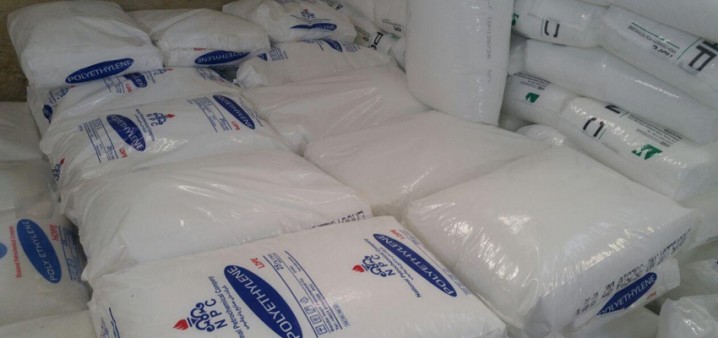
Polyethylene (PE)
Polyethylene is a polymer made from ethylene. Ethylene is the lightest olefin, a colorless, flammable gas with a slightly sweet odor
Polyethylene resins have high flexibility, good resistance to acids, bases, and salts (except strong oxidizing agents) and water
Three main groups of polyethylene: high-density polyethylene (HDPE), low-density polyethylene (LDPE), and linear low-density polyethylene
High-density polyethylene: reduced flexibility, resistance to chemicals and environmental stresses
Light-density polyethylene: low density and good flexibility
Linear low-density polyethylene: better strength and elasticity, resistant to tearing and puncture
Polypropylene (PP)
Polypropylene is a thermoplastic polymer, opaque, rigid, and resistant to heat, chemical solvents, bases, and acids
One of the most important properties of polypropylene is its lack of moisture absorption, which makes it a It has become a suitable choice for many applications.
Ease of molding for injection molding and acceptable fluidity in the mold
Ability to mix with fillers such as sawdust and create composites
Ability to heat weld
Ability to recycle
Phthalates
Phthalates are widely used as plasticizers in PVC production
The use of phthalates as an additive has been a concern in recent years due to the increase in cancer and liver damage.
Among the more than 30 different phthalates available on the market: DEHP is the most widely used plasticizer
DEHP is clear and oily
Widely used in the production of plastic and PVC products manufactured in medical products, blood bags, surgical tubes, food coatings and children’s toys
DEHP can be medically challenging because significant amounts of it have been found in blood products, which can pose health risks due to

Leave a Reply
Want to join the discussion?Feel free to contribute!