
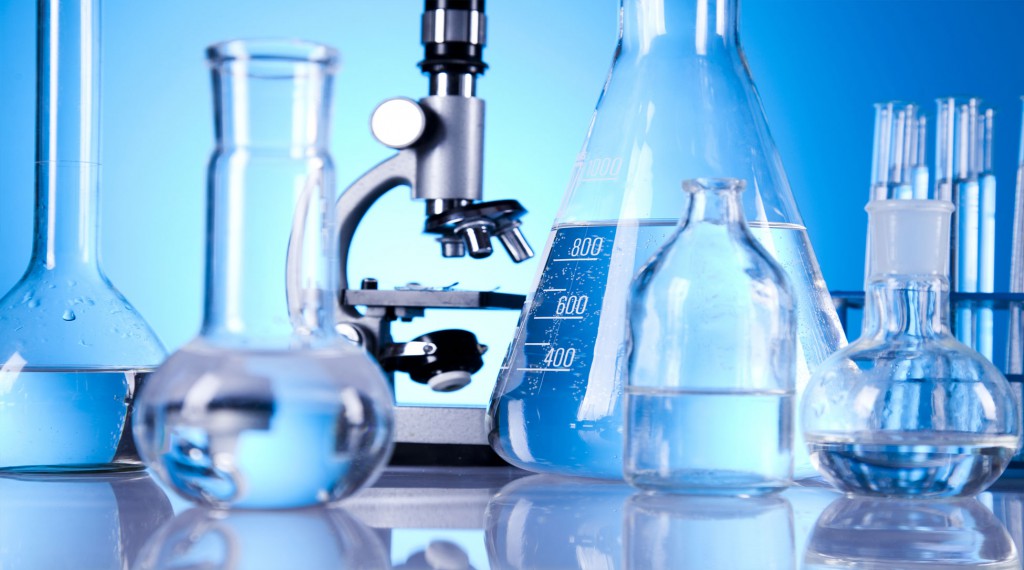
Quality control and laboratory
Pipe Ethylene Company’s laboratory is a reference for testing various types of polyethylene pipes using national and international standards, as one of the capable arms of the company, which operates in line with the major goals of this complex.
Aiming to increase the level of satisfaction of its customers, this laboratory has placed the following at the forefront of its performance through providing laboratory services:
Employing capable and qualified people in the laboratory to ensure correct and accurate testing
Creating motivation, improving the level of skill and efficiency of employees through systematic, planned and continuous training
Expanding the scope of activities related to testing, through conducting studies and purchasing necessary equipment
Continuous improvement in the laboratory’s activities and functions
Following up and dealing with complaints received from customers in a timely and appropriate manner
The most equipped polymer pipe laboratory in the north of the country belongs to Pipe Ethylene. Tests related to polyethylene, polypropylene, PVC and double-walled polyethylene materials and pipes are performed in the Pipe Ethylene Company’s laboratory.
The tests performed in the company’s laboratory are as follows:
Melt flow index test This test is performed on both raw materials and polymer products based on ISIRI 7175-7 and ISIRI 6980 standards.
Density determination test This spear test is performed on raw materials and polymer products based on ISIRI 7175-5 standard for (PE).
Heat recovery test This test is specific to polymer pipes. For PE, it is performed based on ISIRI 7175-3 standard.
The test to determine the percentage of the cycle is performed based on ISIRI 7175-2 standard on both the final product and the raw materials of the paint itself.
The test to determine the distribution and dispersion of the cycle is performed based on ISIRI 7175-5 standard on both the product and the gravities of the raw materials of the paint itself.
The raisin test is performed on the product sample after preparing a furniture-shaped sample from the pipe based on ISO 6259 standard.
Thermal stability test is performed on the manufactured product according to ISIRI 7175-8 standard.
Resistance test in dimicromethane solvent This part is specific to PVC pipes (based on ISIRI9117 and ISIRI10609 standards)
Pressure test is performed according to the standard for all polymer pipes.
Vicat softening temperature test is performed according to ISIRI 2616 standard for PV pipes.
Impact test is performed according to ISIRI 9117 and ISIRI 11438 standards for PV and according to ISO 9856 standard for PP.
Internal pressure measurement
This test itself includes two types of tests, which are:
Burst test:
In this test, the pipe is placed under internal pressure at a fluid temperature of 22-250oc after isothermalization in the laboratory and the fluid environment. In this test, the ultimate pressure tolerance limit in the pipe and the type of material behavior and its processing are examined.
Static test:
This test is different from the burst test. In this test, based on the outer diameter, wall thickness and type of raw material, the pressure that must be applied to the pipe is calculated and placed under that pressure for the time specified by the standard, and ultimately no physical changes, including breakage or bursting, are observed.
Dimensional controls
Calipers:
The laboratory of Pipe Ethylene Company is equipped with two digital calipers from Mitotoyo, Japan, which measure the width and wall thickness of the pipes.
Circummeter:
The outer diameter of the pipes is measured by 4 circummeters from 20 mm to 1600 mm in size.
Appearance and marking controls will also be performed.